Katarina Mišura – PODcast session
- Post by: fantom
- 25 May 2026
- Comments off
VIENNA, April 23
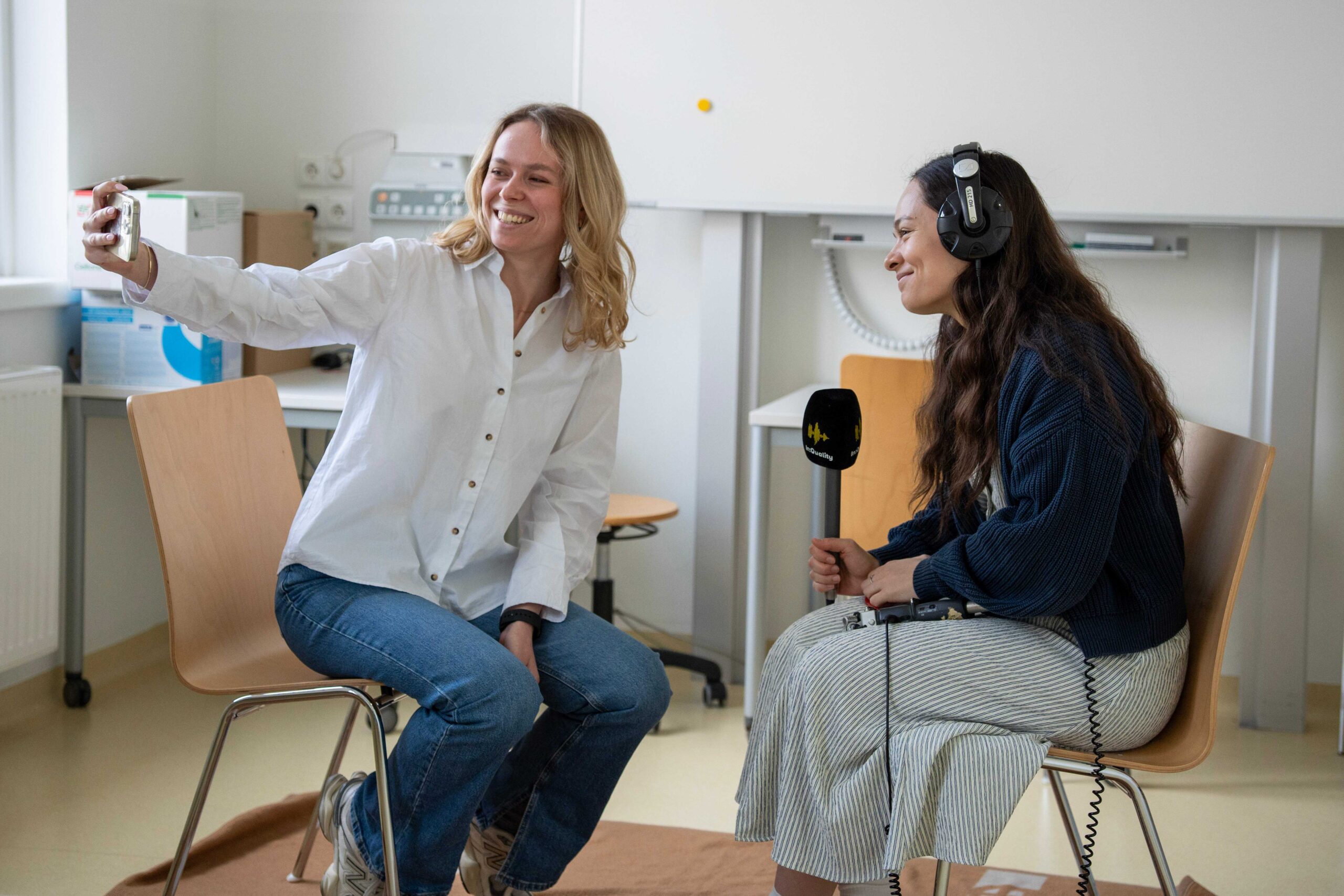
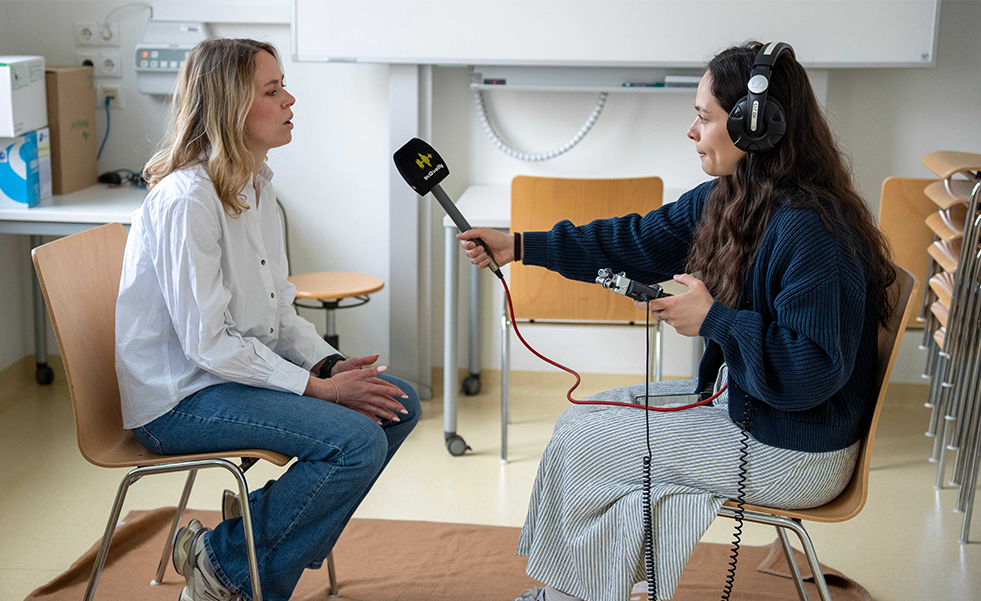
Fantom Doctoral Candidates took an important step in developing their communication skills by recording their first podcast series. The session was held with the support of science communication professionals Rhys James and Rachael Ralph from The Naked Scientists.
The initiative provided participants with practical experience in presenting their research to a wider audience. Listen to Katarina discussing her research project in a conversation with Rachael.
ABOUT:
Katarina Mišura (MUW)
Epigenetics of ALCL Drug Resistance
In my PhD work we are investigating a rare type of T cell lymphoma occuring mostly in children and young adults. We are investigating what happens when a patient stops responding to therapy, how does the cancer cell change so that it cannot be killed by the drug anymore. Chemotherapy is quite efficient, but if it stops working, patients are given targeted therapy. It targets protein ALK which when activated leads to cancer. These drugs stop this activation of ALK – the signal that the cancer cell need.
This mechanism by which the cancer cell changes so it can avoid being killed by a drug is called drug resistance. You can think of it as a route which cancer cell is taking, if you block the road, it will adapt and just take a different road to the same goal – keep on dividing and forming cancer. For example, if you are blocking ALK protein, it might just make more ALK protein. Or it makes a specific change in the protein so that the drug cannot target it anymore. Or it will just stop using ALK protein and use a different path that will lead to survival.
We are looking for new drugs that could be used in these situations, which includes drugs that are already used for other cancer type, but it is still not known if they could be beneficial in this specific lymphoma type. Our hypothesis is that epigenetic drugs might solve problem of drug resistance to ALK inhibitors. Epigenetic drugs are already approved for different cancer types including lymphoma, just not the type of lymphoma we are investigating. But since it’s already used and approved in the clinics, it makes sense to test if these drugs kill ALK positive lymphoma cells.
To explain epignetics better, we could say it’s like a control system of the cell. It is like a switch which turns genes on and off, depending on what the cell needs in that moment. By turning gene expression on and off it regulates which proteins are going to be made. This is an interesting way of regulation because the DNA sequence is not changed, so the information is still there, it just says it this information will be read or not. DNA sequence is a string of letters, which you could imagine as a book. Epignetics is like sticky notes or bookmarks which tells the cell which part of the book to read. The content of the book doesn’t change, it’s the paragraphs that need to be read that change. Depending on the paragraphs you read, the end story can look completely different.
In case od drug resistance, change of epignetic programming of the cell allows the cell to switch to a programm that will allow survival under drug pressure. We want to find out which program is this and how we can block it. The impact of this is giving patients new therapy options.