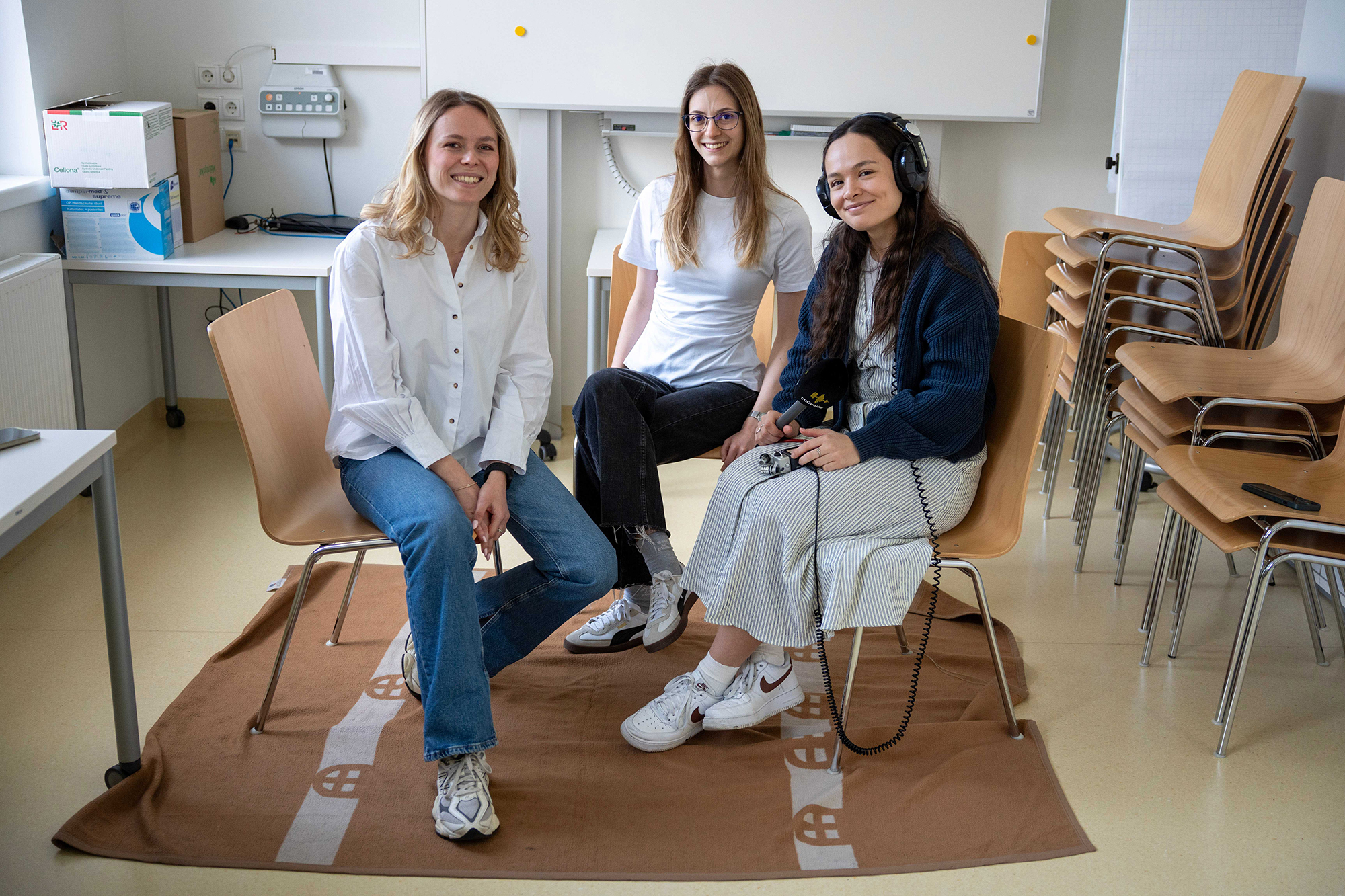
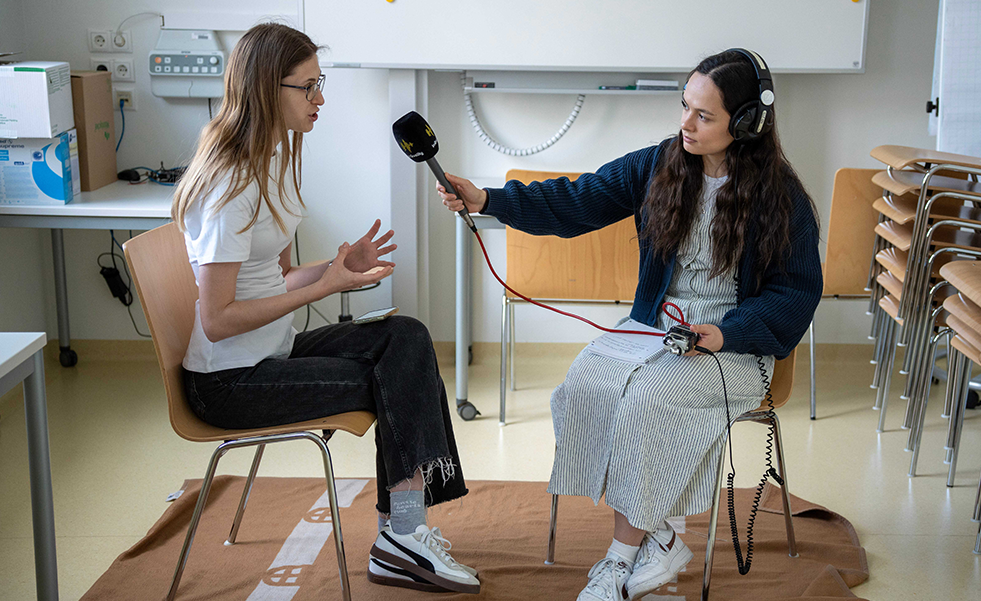
Magdalena Kršić (TUM) about her research in podcast series
- Post by: fantom
- 4 June 2026
- Comments off
VIENNA, April 23 – Fantom Doctoral Candidates took an important step in developing their communication skills by recording their first podcast series. The session was held with the support of science communication professionals Rhys James and Rachael Ralph from The Naked Scientists.
The initiative provided participants with practical experience in presenting their research to a wider audience. Listen to Magdalena discussing her research project in a conversation with Rachael.
ABOUT:
Magdalena Kršić (TUM)
Development of a TME-based Immunoscore as a prognostic and predictive biomarker for ALCL – Most people think cancer is just about the tumor itself, a mass of “bad” cells growing out of control. But that’s only part of the story. What I study is everything around the tumor – the immune cells trying to fight it, the surrounding support cells, and the signals they all send to each other. This environment is called the tumor microenvironment, and it can actually decide whether cancer grows, spreads, or gets stopped. To understand this hidden world, I use cutting-edge technologies that let me zoom in at an incredible level of detail. I can measure dozens of proteins and hundreds of genes in a single piece of tissue, while also seeing exactly where each cell is located, almost like a high-resolution map of a tiny city. And that’s important, because it’s not just about which cells are there. It’s about how they interact. Some cells help the immune system attack the tumor, while others can actually protect it. These cellular “conversations” might explain why some cancers respond to treatment and others don’t. The exciting part? Scientists are now developing new therapies that don’t just target the tumor itself, but this entire surrounding environment. By understanding it better, we could unlock new ways to make treatments work more effectively. So in a way, I’m not just studying cancer. I’m studying the ecosystem it lives in. And that ecosystem might hold the key to beating it.