
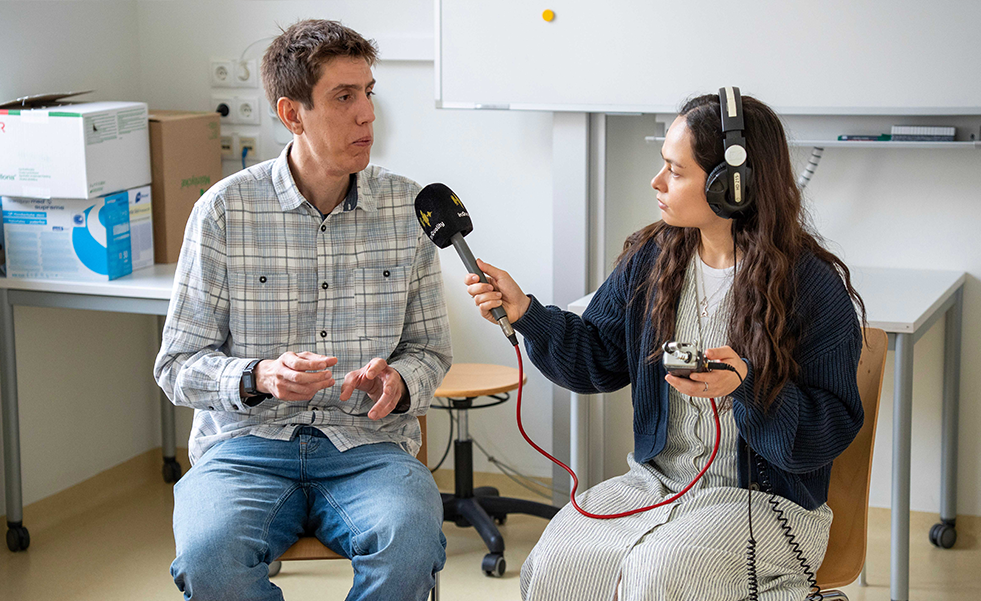
Nicola Mora (MUW) about his research in podcast series
- Post by: fantom
- 8 June 2026
- Comments off
VIENNA, April 23 Fantom Doctoral Candidates took an important step in developing their communication skills by recording their first podcast series. The session was held with the support of science communication professionals Rhys James and Rachael Ralph from The Naked Scientists.
The initiative provided participants with practical experience in presenting their research to a wider audience. Listen to Nicola discussing his research project in a conversation with Rachael.
ABOUT:
Nicola Mora (MUW)
STAT1 as tumor suppressor and potential therapy target in Anaplastic Large Cell Lymphoma
My research is about a cancer called ALCL, which affects immune cells known as T-cells. These cells normally help your body fight infections, but in this disease they accumulate genetic errors and start multiplying uncontrollably, crowding out the healthy ones and compromising the ability of the immune system to work properly.
The type of ALCL I study is caused by a genetic accident where two genes accidentally fuse together, generating a defective protein that constantly pushes the cell to grow and divide. But like any living cell, even cancer cells need to maintain a delicate balance — too little signal and they die, but too much signal and they also die.
There are already drugs called ALK inhibitors that work by cutting off the growth signal at the source, starving the cancer cells until they die. The drug I am testing works in the completely opposite way. Instead of reducing the signal, it destroys the protein responsible for keeping that balance in check, causing the signals to go out of control. The cancer cells then receive too much stimulation than they can handle and end up destroying themselves.
I am also looking at whether this destruction then triggers the immune system to jump in and clear out whatever is left — so instead of just using the drug alone, the body becomes part of the treatment too.
On top of that, since the same genetic accident shows up in other cancers as well, we are testing whether this drug could be useful beyond ALCL too.
