Carla Vázquez Amos (UCAM – Fantom´s UKRI associate) – PODcast session
- Post by: fantom
- 11 June 2026
- Comments off
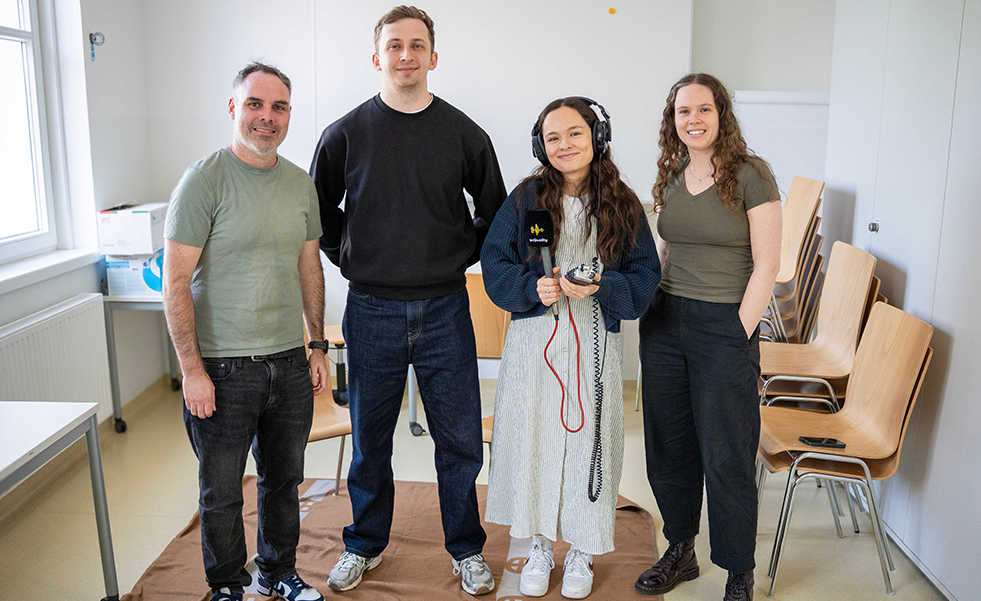
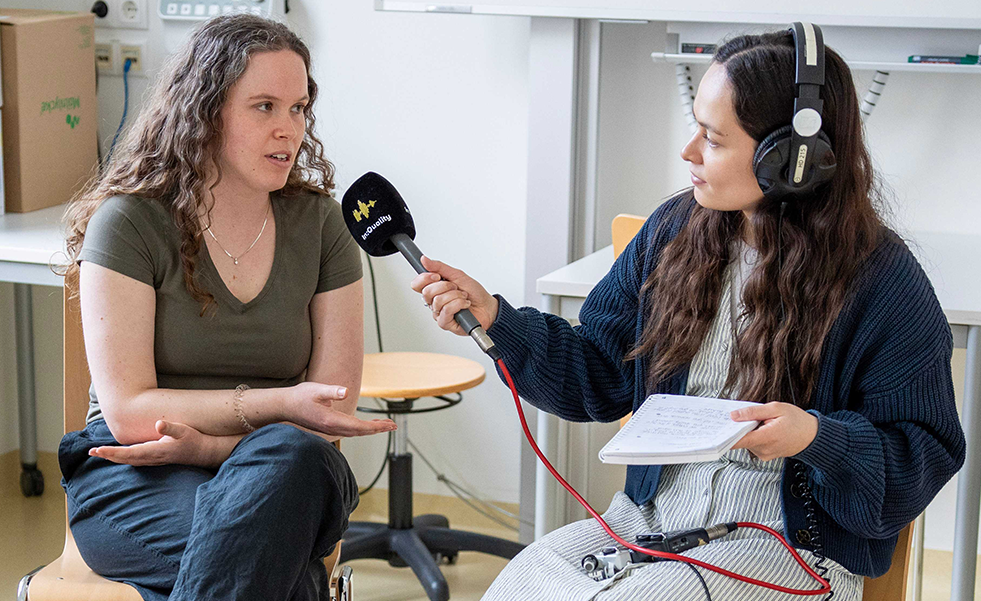
VIENNA, April 23 Fantom Doctoral Candidates took an important step in developing their communication skills by recording their first podcast series. The session was held with the support of science communication professionals Rhys James and Rachael Ralph from The Naked Scientists.
The initiative provided participants with practical experience in presenting their research to a wider audience. Listen to Carla discussing her research project in a conversation with Rachael.
ABOUT:
Carla Vázquez Amos (UCAM – UKRI associate)
Investigating the role of the T cell receptor (TCR) in ALCL pathogenesis towards the development of an innovative therapeutic approach
My research focuses on understanding how and why people get cancer. Specifically, I study two subtypes of a rare immune cell cancer called Anaplastic Large Cell Lymphoma (ALCL). In this disease, T cells that are usually protecting the body from cancer have become cancer. In the first subtype I study, these T cells have a protein called ALK that they’re not supposed to, because two genes have been chopped and stuck together by accident in the patients’ DNA. Constant ALK activity can cause uncontrolled cell growth. However, we do sometimes find these two genes fused together in the blood of healthy people and from umbilical cords of healthy babies. Therefore, we think another event might be required to trigger the cancer. To investigate this, I am using mice with genetic modifications that mimic the disease, genetically modified human cells, patient samples and bioinformatic approaches. My findings suggest the second essential event in the creation of this cancer is linked to a signalling pathway important in how T cells are educated to protect the body. Interestingly, in mature T cells, this pathway is also important in sensing the environment for foreign agents.
The other subtype I study is called Breast Implant Associated ALCL, which arises in some people who have textured breast implants. Although this cancer looks broadly similar to the other subtype under the microscope, it doesn’t have the ALK protein. We think there is a chemical present on the implants that causes T cells to become cancerous. I’m working with chemists, materials scientists and a masters student to identify which chemicals are on implants and how they affect our cells. Overall, we hope that increasing our understanding of how these cancers start will help us improve treatments for ALK+ ALCL and avoid more cases of BIA-ALCL happening in the future.