
Julia Montague – Secondment at the Medical University of Vienna
- Post by: fantom
- 16 February 2026
- No Comment
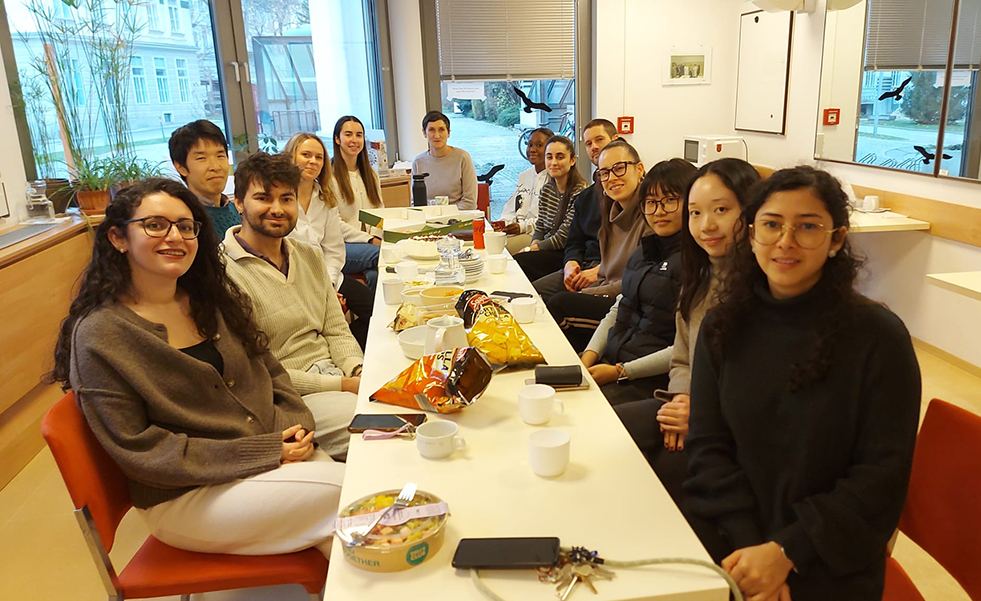
As part of the FANTOM Doctoral Network, I completed my three-month secondment at the Medical University of Vienna in the lab of Prof. Gerda Egger, an internationally recognized group with strong expertise in cancer epigenetics. My PhD project at the University of Milano-Bicocca focuses on understanding how drug-tolerant persister cells (DTPs) emerge and survive in ALK-positive anaplastic large cell lymphoma (ALK+ ALCL). Given that DTPs are increasingly recognized as being driven by epigenetic mechanisms and transcriptional rewiring rather than stable genetic mutations, the Egger lab provided the ideal environment to further investigate these processes.
DTPs represent a transient but clinically relevant cell population that survive targeted therapy and can ultimately contribute to relapse. During my secondment, I focused on characterizing the epigenetic landscape of persistence. In particular, I performed chromatin immunoprecipitation (ChIP)-seq on a transcription factor we identified as being upregulated in DTPs and methylation profiling, paired to samples for which transcriptional data were already generated, to identify the regulatory networks sustaining the drug-tolerant phenotype.
An exciting aspect of this work was the opportunity to analyze state-of-the-art patient-derived xenograft (PDX) models provided by the Turner lab at the University of Cambridge. Access to these highly translational models significantly strengthened the project and expanded the scope of our analyses.
Technically, this secondment was an intensive and highly valuable learning experience. I received hands-on training in ChIP-seq experimental design and workflows within a lab deeply specialized in epigenetic profiling. Beyond the technical skills, the secondment fostered strong scientific exchange and collaboration. Working in a new research environment helped me refine both experimental strategies and the broader conceptual framework of my project.
Overall, my time at the Medical University of Vienna was scientifically productive and personally enriching. I am grateful for the opportunity to train in such a strong epigenetics-focused lab and look forward to continuing the collaboration.