

The international FANTOM project enters its fourth year, shaping the future of paediatric lymphoma research
- Post by: fantom
- 14 January 2026
- No Comment
The FANTOM project (Future of ALCL: Novel Therapies, Origins, Biomarkers and Mechanisms of Resistance) is a prestigious international network funded under the Marie Skłodowska-Curie Actions – Doctoral Networks (MSCA DN). Since 2023, it has brought together leading European academic institutions and partners from industry with the shared goal of substantially advancing research and treatment of anaplastic large cell lymphoma (ALCL). ALCL is a rare but aggressive form of non-Hodgkin lymphoma that primarily affects children and young adults. The four-year project is coordinated by Professor Suzanne Dawn Turner, who holds appointments at the Faculty of Medicine, Masaryk University, and the University of Cambridge.
The FANTOM network brings together seven core beneficiaries and ten associated partners from five European countries: the Czech Republic, the United Kingdom, Austria, Italy and Germany. The academic consortium includes Masaryk University, the Medical University of Vienna, the University of Turin, the University of Milano-Bicocca, the University Medical Center Hamburg-Eppendorf, the University of Padua, and the Klinikum rechts der Isar of the Technical University of Munich. These institutions are complemented by a strong group of industrial and professional partners, including Open Science, the European Hematology Association, biolution, THT Biomaterials, GPOH, CBmed, Munich Leukemia Laboratory (MLL), Miltenyi Biotec and the Milner Therapeutics Institute, as well as science communication specialists from The Naked Scientists.
The research programme focuses on three closely interconnected areas:
- Investigation of the biological mechanisms underlying ALCL, with particular emphasis on the immune microenvironment and inflammatory signalling pathways;
- Development of novel non-invasive biomarkers with potential clinical applicability;
- Identification of mechanisms of resistance to modern targeted therapies, especially ALK tyrosine kinase inhibitors.
One of the major milestones of the initial phase of the project was the competitive recruitment process for ten doctoral positions. In total, 212 applications were received from candidates representing 49 countries, reflecting the international visibility and scientific relevance of the network. The recruitment itself lasted almost a year, from March 2023 to January 2024, when contracts were signed with the final doctoral candidate.
The selection process was coordinated by the Faculty of Medicine at Masaryk University in close cooperation with partner institutions. Positions were advertised on leading international platforms such as Nature, findaphd.com and EURAXESS. A key eligibility criterion was compliance with the MSCA mobility rule, which requires that applicants must not have lived or worked in the host country in the preceding years. As Professor Turner recalls: “We were looking not only for technically strong candidates, but above all for highly motivated individuals with a genuine passion for cancer research. The number and quality of applications was impressive and confirmed that FANTOM has the potential to attract outstanding talent from around the world.”
Ultimately, ten doctoral candidates from eight countries and three continents were selected, forming the core of the international research network. The cohort includes researchers from India, Italy, Croatia, the United States, the United Kingdom, Germany, Costa Rica and Spain.
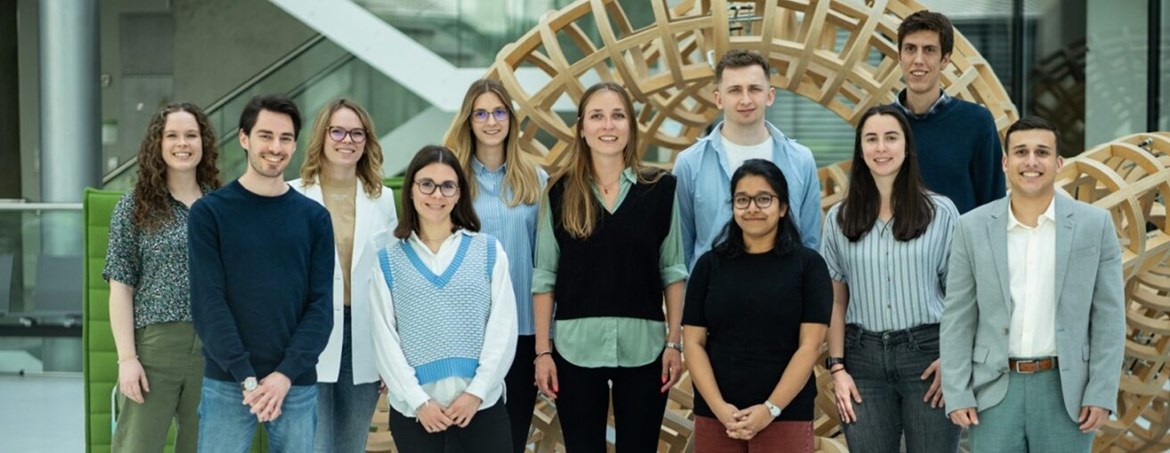
“In this programme, doctoral researchers are at the very centre,” Professor Turner adds. “Our aim is to train a new generation of scientists while at the same time addressing the clinical challenges associated with ALCL.”
A central pillar of the MSCA Doctoral Networks is compulsory international and intersectoral mobility, which in FANTOM is implemented through academic and industrial secondments. Each doctoral candidate completes placements that connect fundamental and applied research:
Aiindrila Dhara, originally from India and currently based at Masaryk University, undertook a research secondment at the University of Cambridge, where she studied mechanisms of treatment resistance using patient-derived xenograft (PDX) models.
Stefania Massari from Italy, based at the Medical University of Vienna, completed a placement at CEITEC Masaryk University, focusing on advanced molecular and cellular analyses.
Katarina Mišura from Croatia, also at the Medical University of Vienna, spent her secondment in Professor Turner’s laboratory at the University of Cambridge, where she worked on the development and characterisation of a 3D organoid model of ALK-positive anaplastic large cell lymphoma. She gained experience in drug resistance research, CRISPR screening, RNA-seq data analysis and flow cytometry.
Julia Montague from the United States, enrolled at the University of Milano-Bicocca, undertook an industrial secondment at GalSeq in Milan, where she gained hands-on experience with RNA-seq and PCR library preparation, Illumina NGS workflows and analytical procedures including automated electrophoresis. She also developed advanced skills in bioinformatic analysis of sequencing data (RNA-seq and CRISPR screening) using R and Python, which directly support her research on ALK-positive ALCL.
Will Shepheard from England, currently at the University Medical Center Hamburg-Eppendorf, has so far completed an industrial secondment at Miltenyi Biotec in Germany, where he was trained in multiple applications of the MACSQuant flow cytometer, magnetic cell separation strategies and microchip-based cell sorting using the MACSQuant Tyto. A further academic secondment at the University of Padua is planned.
Rebekka Johanna Sabine Salzmann from Germany, based at the University of Padua, carried out a research stay in the laboratory of Professor Gerda Egger at the Medical University of Vienna. “During my stay in Vienna, I had the opportunity to work on the isolation of primary macrophages directly from the blood of healthy donors. It was an incredible experience, as was representing FANTOM at the EHA Congress in Milan, where we shared our work with leading experts in the field,” she recalls.
Nicola Mora from Italy, currently at the Medical University of Vienna, completed a secondment in Munich at the Klinikum rechts der Isar under the supervision of Professor Lena Illert, where he gained experience in analysing immune cell profiles in a mouse model. He subsequently undertook an industrial placement at the MLL laboratories, performing and analysing single-cell RNA sequencing with specialist training provided by the host institution.
Gerardo Enrique Abarca Ríos from Costa Rica, based at Masaryk University, completed a research secondment at the Department of Pathology at the University of Cambridge, where he focused on the functional validation of candidate genes involved in acquired resistance to ALK inhibitors in ALCL.
Magdalena Kršić from Croatia, currently at the Technical University of Munich, spent her industrial secondment at CBmed in Graz, working on image analysis in the field of spatial proteomics using software unavailable at her home institution. The placement enabled her to gain interdisciplinary mentoring and practical experience with spatial analysis, and the results will be integrated into her PhD project.
Carla Vasquez-Amos is a UKRI-funded researcher whose work runs in parallel with, and complements, the FANTOM project. She participates in all training activities together with the FANTOM doctoral candidates and forms an integral part of the MSCA doctoral community.
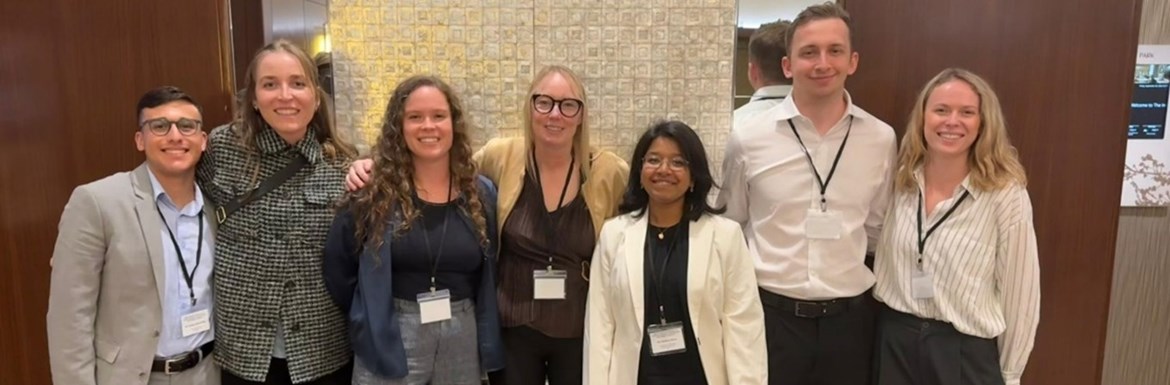
The FANTOM doctoral researchers have already achieved notable scientific success and international visibility during their studies. They actively present their work at leading conferences, including the European Hematology Association Congress, meetings of the Young NHL Network, and international workshops focused on paediatric and adolescent non-Hodgkin lymphomas.
A particularly noteworthy achievement is the award of the Fellinger Krebsforschung grant to Katarina Mišura. “My project explores epigenetics and drug resistance in ALK-positive ALCL. Receiving the Fellinger grant comes at an ideal time to support my research and to help open new therapeutic possibilities for patients who do not respond to standard treatment,” she explains. At the 2025 annual project meeting in Cambridge, Stefania Massari received the award for best poster, while Aiindrila Dhara was recognised for best presentation.
The doctoral candidates have also contributed to high-quality publications in leading international journals. Key outputs include a study published in Leukemia, which identifies HDAC1 as a tumour suppressor in ALK-positive ALCL, and research on extracellular vesicle miR-122-5p as a potential prognostic biomarker in paediatric Hodgkin lymphoma. More recently, a paper in Frontiers in Bioengineering and Biotechnology presented novel applications of sustainable biomaterials derived from human placenta for 2D and 3D cell cultures, tissue engineering and regenerative medicine.
In addition to laboratory research, the project places strong emphasis on the systematic development of transferable skills. The doctoral candidates have completed training in genomic technologies, clinical research, bioethics, grant writing, patent strategy and career development. In 2026, they will participate in specialised training in Vienna and contribute to the recording of episodes for the FANTOM podcast.
The FANTOM project also actively promotes dialogue with patients and their families. In Cambridge, doctoral researchers met with ALCL patients and parents of paediatric patients. “It was an inspiring and deeply human encounter. Our aim was to listen to their stories in order to better align the priorities of our future research. Research on rare cancers requires precisely this kind of empathy and connection with real lives,” Professor Turner notes.
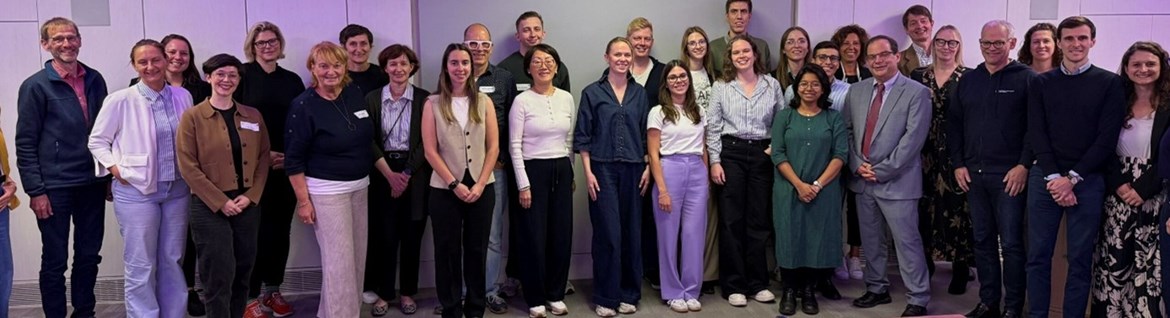
The culmination of the project will be the final meeting, which will take place on 7–8 September 2026 in Padua, Italy, with the participation of all partner institutions and members of the scientific advisory board. This two-day event will provide a platform for presenting the main project outcomes, evaluating the achievement of its objectives and discussing future collaboration. It will be followed by specialised doctoral training focused on intellectual property, patenting and the commercialisation of research results, organised in cooperation with the Milner Therapeutics Institute within the BioSpark programme.
Over the course of its implementation, FANTOM has established itself as an exceptional international doctoral network that brings together cutting-edge research, high-quality training and European cooperation. Through its strong consortium, emphasis on mobility and interdisciplinarity, and commitment to early-career researchers, the project not only generates new insights into the biology and treatment of paediatric lymphoma, but also prepares a new generation of scientists for careers in both academic and applied settings. It thus leaves a lasting scientific, educational and societal legacy that will continue to shape ALCL research well beyond the formal end of the project.
Further information is available on the project website (https://fantom-project.eu/) and on LinkedIn (@fantomEUproject).
Key takeaways from Professor Turner for future applicants:
• Start early and build a genuinely diverse European consortium.
• Ensure meaningful involvement of industrial partners in training activities.
• Set realistic milestones and timelines, bearing in mind doctoral obligations and partner workloads.
• Be prepared to adapt plans if team members or partners change.